
Telephone system
Yeastar Neogate TG400: Enhancing Communication with 4 Port GSM VoIP Gateway
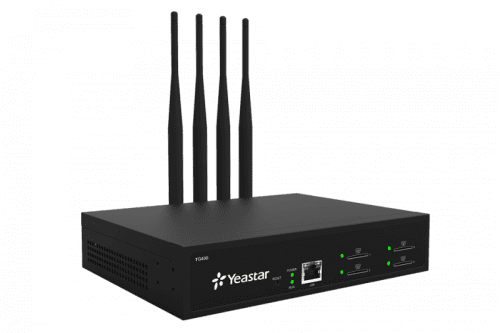
In today’s interconnected world, businesses need reliable and cost-effective communication solutions to stay connected with their customers and partners. The Yeastar Neogate TG400 is a cutting-edge GSM VoIP gateway designed to enable seamless integration between GSM networks and VoIP infrastructure. With its four GSM ports, support for 3G/4G networks, and Ethernet interface, the TG400 offers businesses enhanced communication capabilities. In this blog post, we will explore the key features and benefits of the Yeastar Neogate TG400 GSM VoIP gateway.
Features and Benefits of Yeastar TG400
- Efficient Connectivity: The Yeastar Neogate TG400 GSM VoIP gateway comes equipped with four GSM ports, enabling businesses to connect their VoIP infrastructure with GSM networks. This connectivity is crucial for businesses that require the flexibility and coverage of GSM networks in their communication systems. By integrating GSM networks into their VoIP infrastructure, businesses can benefit from expanded communication options and improved coverage.
- Support for 3G/4G Networks: The Neogate TG400 supports both 3G and 4G networks, ensuring compatibility with the latest mobile technologies. This flexibility allows businesses to leverage high-speed mobile networks for their communication needs. Whether it’s voice calls, SMS messages, or data transmission, the TG400 enables businesses to take advantage of the enhanced capabilities of 3G and 4G networks, delivering reliable and efficient communication services.
- Seamless Integration: The Yeastar Neogate TG400 seamlessly integrates with existing VoIP infrastructure, making it easy to incorporate GSM connectivity into your communication system. With a 10/100 Mbps Ethernet interface, the TG400 can connect directly to your IP-PBX, softswitch, or SIP server, enabling smooth and hassle-free integration. This integration capability ensures that businesses can leverage their current VoIP infrastructure while expanding their communication options with GSM networks.
- Wide Network Compatibility: The TG400 GSM VoIP gateway supports network frequencies of 850/900/1800/1900MHz, making it compatible with a wide range of GSM networks worldwide. This flexibility allows businesses to deploy the TG400 in various regions and seamlessly connect with local GSM networks. Whether you operate locally or internationally, the TG400 provides the necessary compatibility to ensure uninterrupted communication.
- Cost-Effective Communication Solution: By utilizing the Yeastar Neogate TG400 GSM VoIP gateway, businesses can achieve significant cost savings in their communication expenses. The gateway leverages GSM networks, which typically offer lower call rates and data charges compared to traditional telephony services. By routing calls through GSM networks, businesses can reduce their telecommunication costs and optimize their communication budget.
- Reliable and Secure Communication: The TG400 is built with reliability and security in mind. The gateway ensures stable and high-quality voice calls, SMS services, and data transmission over GSM networks. Additionally, Yeastar implements robust security measures, including encryption protocols and authentication mechanisms, to protect communication channels and data integrity. This ensures that businesses can communicate with confidence, knowing that their sensitive information remains secure.
Conclusion
The Yeastar Neogate TG400 GSM VoIP gateway is a powerful communication solution that bridges the gap between GSM networks and VoIP infrastructure. With its four GSM ports, support for 3G/4G networks, wide network compatibility, and seamless integration capabilities, the TG400 enhances communication options for businesses. By incorporating GSM connectivity, businesses can enjoy cost-effective communication, improved coverage, and reliable connectivity. The TG400 is an ideal choice for businesses looking to optimize their communication infrastructure and leverage the benefits of GSM networks.