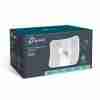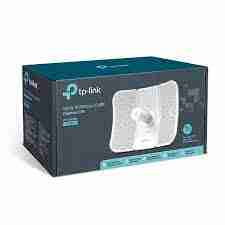
TP-Link CPE 5GHz 300Mbps 23dBi Outdoor CPE – TL-CPE610
KSh9,500.00 Excl. Tax
The TP-Link TL-CPE610 delivers reliable long-range wireless connectivity for outdoor networks. It combines a 23 dBi directional antenna with 2×2 MIMO technology to provide stable point-to-point and point-to-multipoint wireless links. Therefore, it is a practical choice for businesses, campuses, farms, and remote sites.
Genuine product Secure checkout Warranty and order support Discounted Prices
TP-Link CPE 5GHz 300Mbps 23dBi Outdoor CPE TL-CPE610
The TP-Link TL-CPE610 delivers reliable long-range wireless connectivity for outdoor networks. It combines a 23 dBi directional antenna with 2×2 MIMO technology to provide stable point-to-point and point-to-multipoint wireless links. Therefore, it is a practical choice for businesses, campuses, farms, and remote sites.
Key Features
- 23 dBi high-gain directional antenna
- 5 GHz wireless operation
- Up to 300 Mbps wireless speed
- 2×2 MIMO technology
- Metal reflector for improved signal quality
- Snap-lock design for quick assembly
- Three-axis alignment for flexible installation
- Pole-mount kit included
- Wind-resistant outdoor design
- Supports Pharos Control centralized management
- Web-based PharOS management interface
Long-Range Wireless Performance
The high-gain directional antenna focuses the wireless signal over long distances. As a result, it improves signal quality and reduces interference. Moreover, the metal reflector increases beam accuracy and helps maintain stable connections.
Easy Installation
The snap-lock design speeds up installation. In addition, the three-axis adjustment allows installers to align the antenna with precision. Consequently, they can achieve stronger wireless links with less effort.
Durable Outdoor Design
TP-Link builds the CPE610 for outdoor environments. Therefore, the sturdy housing performs well in windy conditions. Moreover, the strong design supports reliable operation throughout the year.
Centralized Network Management
The TP-Link TL-CPE610 includes Pharos Control software for centralized management. As a result, administrators can discover devices, monitor network status, update firmware, and perform maintenance from one computer.
Alternatively, the PharOS web interface provides advanced configuration options. Therefore, network administrators can manage devices more efficiently.
Applications
The CPE610 supports many outdoor wireless deployments, including:
- Point-to-point wireless bridges
- Point-to-multipoint connections
- Campus networking
- Farm connectivity
- Warehouse networking
- Building-to-building links
- Remote site connections
Actual wireless speed and coverage depend on the installation environment, interference, and connected devices. Therefore, proper antenna alignment helps achieve the best performance.
Also Check:
Related products
TP-Link Access Points
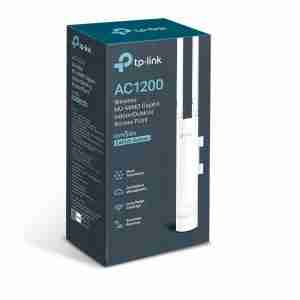
Tp-link EAP225-Outdoor AC1200 Wireless MU-MIMO Gigabit Indoor/Outdoor Access Point


TP-Link Access Points
Tplink AC1900 Wireless Dual Band Gigabit Access Point EAP330

TP-Link Access Points
TP-Link Access Points