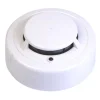
Assenware AW-CSD311 – Conventional Smoke Detector
KSh2,160.00 Excl. Tax
Assenware AW-CSD311 – Conventional Smoke Detector
Genuine product Secure checkout Warranty and order support Discounted Prices
Asenware AW-CSD311 Conventional Smoke Detector
The Asenware AW-CSD311 Conventional Smoke Detector detects smoke during the early stages of a fire. It connects to a compatible conventional fire alarm panel. When it senses smoke, it sends an alarm signal to the panel.
As a result, the fire alarm system can warn occupants quickly. This early warning gives people more time to respond and evacuate safely.
Reliable Smoke Detection
The AW-CSD311 continuously monitors the surrounding air for smoke particles. When smoke enters its sensing chamber, the detector identifies the change. It then sends a signal to the control panel.
Therefore, the device helps detect possible fires before they spread. However, correct placement plays an important role in its performance.
Photoelectric Sensing Technology
The detector uses photoelectric sensing technology to identify smoke particles. This technology uses light inside the sensing chamber. Smoke particles disturb the light path and trigger the detector.
As a result, the AW-CSD311 provides dependable smoke detection in suitable indoor areas.
Simple Two-Wire Connection
The AW-CSD311 uses a conventional two-wire connection. The same pair of wires carries power and alarm communication. Therefore, installers need fewer wires during installation.
In addition, the simple connection reduces wiring complexity. It also makes the detector suitable for compatible conventional fire alarm systems.
Alarm Communication
The detector sends an alarm signal after sensing smoke. Next, the connected control panel starts its programmed emergency response.
For example, the panel may activate sounders, strobe lights, or other warning devices. Consequently, occupants receive a clear warning about the possible danger.
Visual Status Indicator
A built-in visual indicator shows the detector’s operating status. During an alarm, the indicator helps technicians locate the activated detector.
Moreover, it supports routine testing and maintenance. Technicians can quickly check the detector’s response during a system inspection.
Installation and Placement
Installers normally position smoke detectors on ceilings in suitable indoor locations. Common areas include offices, corridors, shops, schools, hospitals, and residential buildings.
However, installers should avoid unsuitable locations with heavy dust, steam, or strong airflow. These conditions may affect detection or cause false alarms.
Key Features
- Detects smoke particles during the early stages of a fire
- Uses photoelectric smoke-sensing technology
- Connects through a conventional two-wire circuit
- Sends alarm signals to a compatible control panel
- Provides a visual status indication
- Simplifies wiring and installation
- Supports conventional fire alarm systems
- Suits many indoor environments
Fire Alarm System Compatibility
The AW-CSD311 works with a compatible conventional fire alarm control panel. The complete system may also include heat detectors and manual call points. In addition, installers can connect suitable sounders and visual warning devices.
Before installation, confirm compatibility with the selected control panel. This check helps ensure reliable communication and correct operation.
Maintenance and Testing
Regular testing helps keep the detector working correctly. Therefore, technicians should inspect the unit and clean it when necessary. They should also test its alarm response according to the maintenance schedule.
Finally, a qualified fire alarm technician should handle the installation. The technician should follow the manufacturer’s instructions and local fire safety requirements.
Also Check:
Related products

Fire Alarms and Accessories

Fire Alarms and Accessories

Fire Alarms and Accessories
Fire Alarms and Accessories